Coaches and therapists use personality quizzes to get clearer intake insight, spot patterns faster, and guide better sessions. This post shows how to create one step by step: choose a single goal, pick a framework, write scenario-based questions, set up simple scoring, and turn each result into session prompts and next steps you can use right away.
Key Takeaways
- Personality quizzes work best as a lightweight personality assessment for reflection, not as a label or diagnosis.
- The real value comes from better intake insight: quizzes surface patterns, triggers, and coping habits faster than open-ended questions alone.
- For coaches, quizzes can sharpen goal-setting, strengthen communication styles, and support leadership development by showing what changes under pressure.
- For therapists, quizzes are most useful as conversation starters that support psychoeducation, journaling, and tracking patterns across different contexts.
- Frameworks like Big Five, DISC, Enneagram, and MBTI/Myers-Briggs are helpful when you treat results as flexible language and always tie them back to real situations.
- Keep your quiz simple: one goal, 3–6 outcomes, scenario-based questions, clear scoring, and result pages that offer a strength, a blind spot, and one small next step.
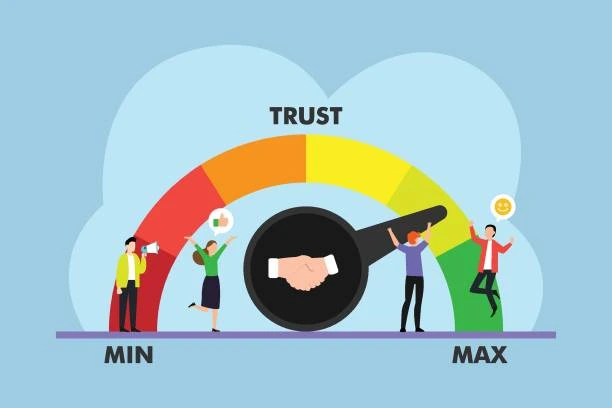
- Build trust by being honest about self-report, reliability, and validity—and by using results as information, not certainty.
How Coaches Use Personality Quizzes
Coaching is full of moments where clients say, “I know what I should do… I just don’t do it.” A quiz won’t magically fix that. But it can help you figure out why the client gets stuck, and what kind of support actually fits their personality.
Better intake, faster
A quiz can make intake feel more human and less like paperwork. Instead of spending session one fishing for patterns, you start with a clearer baseline: what motivates the client, what drains them, what they do under pressure, and what they tend to avoid.
In practical terms, this helps a coach ask better questions sooner. And that’s usually what clients want anyway: fewer generic prompts, more “wow… That’s exactly what happens.”
Goals that match the client’s wiring
Some clients thrive on structure: routines, milestones, checklists, measurable progress. Others shut down when life gets too boxed-in and do better with flexible experiments and meaning-based goals. A quiz can reveal the client’s likely change style so you’re not forcing a strategy that will never stick.
This is one reason personality quizzes show up in professional development and leadership coaching too. When goals match how someone actually works, results come faster.
Communication styles and conflict work
Whether you’re coaching relationships, leadership, or confidence, you’ll run into communication. A quiz can highlight patterns like: “I avoid conflict,” “I over-explain,” “I get defensive,” “I people-please,” “I shut down.” Suddenly you’ve got a clear target.
If your readers work with teams, group programs, or corporate clients, their HR teams can use personality quizzes for team building.
Leadership development that’s actually practical
A lot of leadership issues are not skill issues. They’re stress-response issues.
A quiz can reveal what happens to a client’s decision-making under pressure: do they become rigid, avoidant, controlling, or overly accommodating? That turns “I need to be a better leader” into something you can coach: boundaries, delegation, feedback habits, conflict management, and emotional regulation in tough conversations.
Between-session momentum
The best coaching quizzes don’t end at the result. The result becomes a mini plan: one insight, one reflection prompt, one small action. That kind of structure keeps clients engaged between sessions without making it feel like homework.
And if you want to support the self-awareness angle a coach can use personality quizzes and improve self-awareness.
How Therapists Use Personality Quizzes
Therapists can use quizzes in a way that’s supportive and respectful, especially when the quiz is framed as an “insight tool” rather than a verdict about someone’s identity.
Intake support and pattern mapping
Intake is hard. Clients may not have language, or they may have too much language and no clarity. A quiz can help organize the picture: stress responses, attachment-style tendencies, self-protection strategies, emotional triggers, and coping habits across different contexts.
Even when a client says, “This doesn’t fit,” that’s still useful. It tells you where to explore next. Sometimes the disagreement is the insight.
A gentle bridge into psychoeducation
If someone recognizes a pattern like freezing or fawning, therapists can connect it to nervous system responses in a way that feels grounded in the client’s real experience. It becomes less abstract and more “Oh… that’s what my body is doing.”
Reflection between sessions
Quizzes can be used as a structured reflection exercise: journaling prompts, tracking triggers, noticing what changes in different situations. Over time, that becomes a way to measure growth that doesn’t feel clinical or intimidating.
Trauma Type Quiz and Grief Stage Quizzes can be a great option for the reflection between sessions. And Inner Child Archetype Quizzes can be a gentle way to explore the vulnerable, emotional parts of the self. It often gives therapists a clearer starting point for deeper conversations.
What a Personality Quiz Means in Coaching and Therapy
In this setting, a personality quiz is a lightweight personality assessment built for reflection. It helps a client notice how they usually think, feel, and respond in everyday situations. It’s a snapshot, not a stamp.
That boundary matters, especially because “personality test” can mean a lot of things. Some assessments are formal and validated. Many online quizzes are not. Most are self-report, meaning people answer based on self-image, mood, and context. That doesn’t make them useless. It just means we use them with humility.
So here’s the healthiest way to frame it for clients:
- This is a tool for insight, not a diagnosis.
- Results describe tendencies, not destiny.
- The real value comes from how we discuss it together.
When a coach or therapist uses personality assessments this way, quizzes become less like “labels” and more like a shared map you can explore together.
Why Quizzes Work So Well for Client Insight
Here’s the sneaky power of a good quiz: it pulls people out of vague language and into real life.
Clients often arrive with big, cloudy statements:
- “I’m bad at boundaries.”
- “I can’t stay consistent.”
- “I’m overwhelmed all the time.”
A quiz asks, “Okay, but what happens at the moment?” Do you over-explain? Freeze? Get sharp? Avoid? Try to keep everyone happy? Those answers reveal enduring patterns and those patterns are where you can actually work.
Quizzes also make hard conversations easier. It’s often safer to talk about a “result” than to confess something raw. “I got the avoider under stress result” can be a softer doorway into “conflict scares me and I shut down.”
Once the doorway opens, the real conversation usually follows. That’s why people trust personality quiz results.
Choosing a Framework That Fits Your Purpose
There isn’t one perfect model. There are different models of personality, and each one highlights something different. The trick is to choose the framework that matches the insight you want.
Big Five Personality
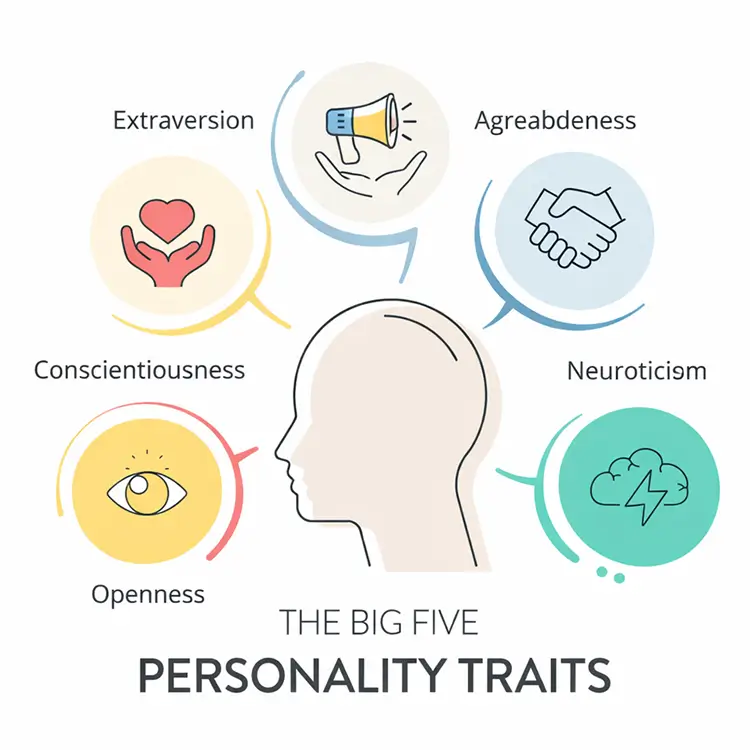
If you want a language that feels research-friendly, Big Five is a strong option. It describes five broad dimensions that show up across many settings: openness (often described as openness to experience), conscientiousness, extraversion, agreeableness, and neuroticism.
Big Five doesn’t try to turn someone into a “type.” It describes tendencies. That makes it easier to discuss personality in different contexts: work vs. home, calm vs. stressed, new situation vs. familiar situation. It’s also easier to explain the “this is not destiny” idea, because traits can shift in how they show up depending on support and stress.
DISC Assessment
A DISC assessment is popular in workplace settings because the language is simple and the conversation stays practical. It’s often used for communication and interaction, leadership development, and team dynamics. If you’re writing for managers, team leads, or HR-friendly coaching niches, DISC can feel like a natural fit.
Enneagram
The enneagram tends to land well with clients who like motivation-based insight. People often resonate with the idea of “core motivations” and growth edges. Used well, it can be a supportive mirror for self-awareness without making people feel boxed in. Many readers will specifically search for “enneagram personality test,” so it’s worth using that phrase when it fits naturally.
StrengthsFinder
Strengths-based work can be a game changer for certain coaching niches. StrengthsFinder helps clients identify their strengths, and that alone can shift a client’s confidence and direction. When a client sees what consistently works for them, you can design goals that feel energizing instead of punishing.
MBTI and Myers-Briggs
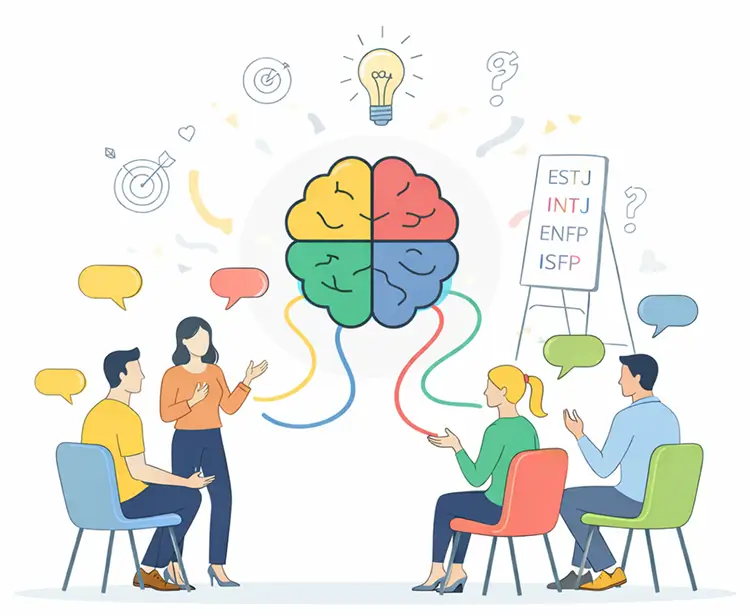
MBTI is still one of the most widely recognized frameworks in coaching culture. Clients bring it up constantly because it’s memorable and easy to talk about. You’ll see it referred to as Myers-Briggs, Myers, Briggs, the Myers-Briggs Type Indicator, or “Myers-Briggs type indicator.”
It’s often connected to Carl Jung, and you’ll see references to Jung’s (and sometimes Carl Jung’s) theory of psychological types. In MBTI language, people talk about four dichotomies, type preferences, and being one of 16 outcomes, commonly called the 16 personality types. Some conversations drift into “dominant type” language too.
A practical reminder worth including in a friendly way: MBTI is administered as a self-report questionnaire in many settings. So it’s best used as a conversation tool, not as something predictive or permanent.
Reliability, Validity, and the Honest Limits of Quiz Results
If you want your blog to feel credible and not like a fluffy “take this quiz to discover your soul” post, it helps to name the basics: reliability and validity.
- Reliability is consistency. If someone takes the same assessment again soon, do they get similar results?
- Validity is whether it measures what it claims to measure.
You’ll often see people mention “reliability and validity” together because you want both: consistency and meaningful measurement.
Now, here’s the human part: even the most “reliable and valid” tool won’t replace a real conversation. People are complex. Context matters. Mood matters. Culture matters. So treat results as information, not truth.
It’s also completely fair to acknowledge the role of a psychologist here: if someone needs formal assessment, diagnosis, or clinical evaluation, quiz-style tools should not pretend to replace that.
How to Use Myers-Briggs in Coaching
The best way to use Myers-Briggs in coaching is to treat it like a language tool.
It can help clients reflect on:
- how they get energized or depleted
- how they process information
- how they make decisions under stress
- what happens in communication when emotions run high
Then you bring it back to reality: different contexts, different situations, different pressure levels. Ask, “Where does this fit in your life?” and “Where does it not fit?” That keeps it grounded and prevents the “I’m an X type so I can’t do Y” trap.
How to Use Quiz Results Inside a Session
Whether you’re a therapist or a coach, quiz results become useful when you run them through a simple flow:
Start with resonance. What feels accurate? or, feels wrong? What surprised them?
Then go specific. When does this show up most? What triggers it? The pattern protect them from? What does it cost them?
Finally, apply. Pick one small experiment for the week. One boundary. One communication script. One practice that fits the client’s personality trait patterns instead of fighting them.
How to Create a Personality Quiz That Helps People
This is the part readers actually want: the build process. If you want to use personality quizzes for client insight, it helps to create them with intention.
Step 1: Choose Your Tool
If you’re using WordPress, a dedicated plugin keeps everything in one place and makes it easier to manage results, scoring, and design without duct-taping tools together.
A solid option is Quiz Maker by AYS Pro, since it’s built specifically for creating quizzes inside WordPress with flexible question types and outcomes. It can be your go-to personality quiz maker.
Step 2: Pick one outcome you want
Choose a single focus: stress response, leadership style, communication pattern, coping strategy, motivation style, or guidance and Counselling support. One quiz, one purpose.
Step 3: Create 3 to 6 result types
Don’t overcomplicate it. Fewer outcomes means clearer results. Each result should feel like a real person, not a horoscope.
Step 4: Write scenario-based questions
Your best questions are the ones clients can feel. Ask about behavior in the moment, especially in different situations.
Instead of “Are you confident?” try “When you feel uncertain, what do you do first?”
Instead of “Are you empathetic?” try “When someone is upset, what is your default move?”
This is how you move from vague identity language to observable pattern language.
Step 5: Keep scoring simple and honest
You don’t need to build a full personality inventory. A simple point system mapped to outcomes is enough, as long as it’s consistent. What matters is that the result makes sense based on the questions.
Step 6: Write result pages like mini support pages
The result page should give a client something real:
- what the pattern tends to look like
- what the strength is
- where it can backfire
- one reflection prompt
- one small next step
Frequently Asked Question About Personality Quizzes
Why do psychologists use personality tests?
Psychologists use personality tests to understand patterns in how a person thinks, feels, and behaves, especially when combined with interviews and observation. The test is rarely the whole answer. It’s one piece of information that guides better questions and clearer understanding.
How do organizations effectively use personality assessments?
Organizations use personality assessments best for development, communication, and team insight. When used well, they help team members understand different personalities, reduce friction, and improve collaboration without turning results into rigid labels.
How to use Myers-Briggs in coaching?
Use it as a shared language, not a box. In coaching, Myers-Briggs can help clients explore type preferences in communication, decision-making, and energy. The best approach is to connect results to real situations, then design strategies that fit the client’s personality type and goals.
What is the role of personality tests in guidance and Counselling?
In guidance and Counseling, personality tests help individuals reflect on strengths, preferences, and patterns so they can make clearer decisions about goals, relationships, learning, and work. The role is supportive: helping people understand themselves and move toward their full potential.
A Closing Thought
Personality quizzes don’t replace good therapy or good coaching. But they can make both clearer, warmer, and more personal. Especially at the beginning, when clients are still trying to explain what they’re going through.
When you build the quiz thoughtfully and use it with care, it becomes more than content. It becomes a small bridge: from confusion to clarity, from self-criticism to self-awareness, and from insight to change that actually fits the person sitting in front of you.