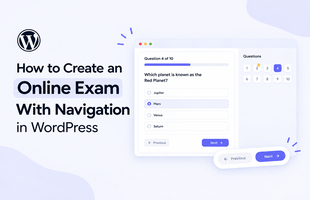
Online exams are no longer “just a digital version of a classroom test.” Today, an online exam can be a quick practice quiz, a timed final, a placement check, or a high-stakes screening for hiring.
This complete guide breaks down the types of online exams you’ll see in real life, how each exam works, and how to choose the right setup inside an online examination system without overcomplicating the process.
If you’re building, running, or taking an exam, this article is worth reading because you’ll learn what each exam type is designed to measure, what “good” assessment looks like online, and how AI is changing exam design, grading, and security.
Key Takeaways
- An online exam can be objective, subjective, practical, or adaptive depending on what you’re measuring.
- The best assessment design always starts with the goal, not the tool.
- MCQs, essays, case studies, coding tests, and psychometric exams all serve different needs.
- AI can speed up evaluation, boost consistency, and improve feedback, but high-stakes results still need oversight.
- Security matters most when the exam is high-impact, not when it’s practice-based.
- A strong platform supports multiple assessment types, reporting, and clean exam management.
What Is An Online Exam, And Why Do Different Exam Formats Exist?
A modern online exam is an examination delivered through a browser or app. Students or candidates log in, answer questions, and submit the exam digitally. The platform tracks timing, scoring, and results.
The reason there are so many formats is simple: not every skill looks the same.
Some people need quick knowledge checks. Others need writing ability. Some need real-world problem-solving. And in hiring, you may need both hard skills and soft skills in one assessment.
That’s why you’ll see different types of online exams across education, hiring, and training. Each one fits a different use case, and a smart system supports more than one.
Types of Online Examination by Assessment Purpose
Before looking at formats or industries, it helps to understand why exams exist. Assessment purpose defines when an exam is used and what decision it supports.
Diagnostic Assessments (Before Learning)
These happen before learning starts.
They’re used to check baseline knowledge, skill gaps, and whether someone is ready for the next level. A common example is placement tests for language programs or skill-based onboarding.
In many cases, a diagnostic online exam helps teachers or trainers build a smarter learning plan. Instead of guessing, they start with data and place learners where they actually belong.
Common diagnostic online exam examples:
- Language placement tests (A1–C2 level checks)
- Skill gap analysis tests for onboarding
- Pre-course readiness exams
- Entry-level screening exams for a program
- Baseline aptitude tests before training starts
Formative Assessments (During Learning)
These happen during the learning journey.
Formative assessment is designed to guide improvement, not to judge someone harshly. Think weekly quizzes, module checks, short online practice tests, or small assignments inside a course.
This type of exam helps students stay engaged, and it helps instructors adjust lessons early. It’s also one of the easiest ways to monitor progress without pressure.
Common formative online exam examples:
- Weekly quizzes and topic checks
- Module-wise assessments inside an LMS
- Short online practice tests after lessons
- Homework-style online tasks
- Mini MCQ checks with instant feedback
- In-course polls and knowledge reinforcement tests
Summative Assessments (After Learning)
These happen after learning ends.
Summative exams are the “final checkpoint” exams. Final exams, annual exams, end-of-course evaluations, and even many high-stakes exams fall into this category.
Because results matter more here, summative exams often use stricter timing, clearer grading rules, and stronger quality controls. They are meant to confirm real mastery, not just participation.
Common summative online exam examples:
- Final exams (semester or end-of-course)
- Annual exams and board-style exams
- Certification-style final evaluations
- Competitive exams and entrance test rounds
- Professional role-based knowledge exams
- Graduation-level or program completion assessments
Types of Online Examination by Question Format
Now that you understand when exams are used, let’s look at how they’re structured. Exam format determines how skills are measured and how results are evaluated.
Objective Exams (MCQs, True/False, Matching)
Objective assessment is the most common online model because it’s fast, scalable, and consistent. You set a correct answer key, and the platform scores it cleanly.
- Description: MCQ, true/false, matching, and fill-in-the-blank questions.
- Best For: Knowledge checks, practice exams, competitive prep, and large groups.
- Capabilities & benefits: Instant grading, speed, fairness, and easy performance tracking.
- Criteria: Quality matters. Bad objective questions give bad data.
The typical format is multiple-choice and MCQ-style questions. You’ll see them in schools, job screening, and nearly every “quick quiz” situation.
An MCQ-based exam works best when you want broad coverage. You can touch many topics quickly, and you reduce bias since scoring is automatic.
With objective exams, platforms can automate scoring using automated grading and show results instantly. This is where analytics becomes a big advantage, because you don’t only see scores, you see patterns.
To reduce cheating, objective platforms often use question pools and randomization. Some systems also add lockdown settings to restrict navigation, especially in strict contexts.
If you’re running a serious online exam session, a secure browser or lockdown browser may be useful, but only when the stakes actually demand it.
Subjective Exams (Essays, Long Answers)
Some exams are meant to measure depth. You can’t always capture real understanding through clicking options. That’s where subjective assessments matter.
- Description: Essays, descriptive answers, long explanations, structured writing
- Best For: Law, literature, research courses, leadership training, and critical thinking checks
- Capabilities & benefits: Measures reasoning quality, clarity, and structure
- Criteria: You need rubrics, and scoring must stay consistent
A subjective exam is great when you want to see how someone thinks. Not what they memorized. These exams show analysis, argument, and real comprehension.
The challenge is grading speed and fairness. Manual checking takes time, and scoring can vary between evaluators.
This is where AI can help. Modern platforms use AI evaluation to scan structure, check concept coverage, and support more consistent scoring. It can reduce grading time without removing human control.
Subjective exams also bring plagiarism risks. Strong systems include checks and flags. Some teams use Turnitin to protect academic integrity during written submissions.
Practical Exams (Case Studies and Simulations)
Some exams are designed to feel like the real world. Instead of “what’s the answer,” they ask “what would you do?”
- Description: Case studies, scenario tasks, simulation-based questions, decision workflows.
- Best For: Business training, healthcare education, leadership screening, and applied learning.
- Capabilities & benefits: Tests real behavior, analysis depth, and decision quality.
- Criteria: Keep scenarios realistic and aligned to the role.
Case-study exams are great when you want strong assessment quality. They reveal how candidates interpret information and how they explain decisions.
A good case-based exam can be scored with structured rubrics. Even when AI supports it, human review for key decisions is still wise.
Simulations go even deeper. They test performance rather than memory. Candidates have to respond correctly, under time pressure, and often with changing conditions.
Many training teams use these formats in corporate training because they feel practical. They also create more confidence that the person can perform the job, not just pass a quiz.
Coding and Technical Exams
Programming exams test real ability, not just knowledge. A good coding assessment checks logic, execution, and how someone approaches a problem.
- Description: Code challenges, debugging tasks, and algorithm problems.
- Best For: Developer hiring, CS education, technical screening.
- Capabilities & benefits: Accurate performance evaluation with clear scoring.
- Criteria: Use good test cases and protect integrity.
Coding exams can include theory, but the best signal comes from actual code output. Candidates write code, run it, and the system checks correctness.
This is where systems to automate grading are extremely useful. They check output against test cases and reduce manual effort.
Because copying is a risk, platforms often include plagiarism detection and similarity checks. That helps maintain fairness across candidates.
Coding exams can also be paired with time limits. The goal is not only correctness, but also speed under real pressure, which reflects real work conditions.
These exams are perfect for skill-first hiring, because they reduce guesswork. You can see the real performance.
Types of Online Examination by Use Case and Industry
Exam formats stay the same, but expectations change depending on context. The same MCQ or essay looks very different in a classroom versus a hiring pipeline.
Online Academic Exams (Schools And Universities)
Academic exams are the most familiar form of online testing. Schools, colleges, and universities use them for quizzes, midterms, and finals.
- Description: Curriculum-based exams using objective and subjective formats.
- Best For: Regular grading, subject mastery, and remote learning workflows.
- Capabilities & benefits: Better reporting, faster scoring, consistent delivery.
- Criteria: Ensure fairness, clarity, and stable technical access.
A school online exam can include MCQs, short answers, essays, and math problem solving. The format depends on the subject and the learning goal.
For teachers, digital exams reduce repetitive work. A platform can automate basic scoring, generate feedback, and reduce manual paperwork.
This also supports scale. One teacher can handle larger classes with less burnout, especially if the system includes grading support and reporting.
The most important part is the experience. Students should be able to complete the exam without anxiety about broken links or unclear instructions.
Good systems provide clean interfaces and clear timing. They also let teachers review students’ results without digging through messy spreadsheets.
Hiring and Recruitment Exams
Hiring and recruitment exams are used to screen candidates early by assessing reasoning ability, thinking patterns, and behavioral tendencies. They help narrow applicant pools and guide deeper evaluation, not make final hiring decisions.
Aptitude Tests
Aptitude tests have become the default screening tool in many recruitment pipelines, and for good reason. They’re quick, structured, and reveal thinking patterns fast.
- Description: Tests focused on reasoning, speed, and pattern recognition.
- Best For: Early-stage hiring, scholarship screening, and competitive exam prep.
- Capabilities & benefits: High scalability, clear benchmarking, fast scoring.
- Criteria: Avoid bias and don’t over-trust a single test result.
Aptitude exams often measure analytical reasoning, numerical ability, and verbal reasoning. They also include logic puzzles and time-based challenges.
This exam format is typically a timed exam, because speed and accuracy both matter. It’s not only about being right. It’s about being right under pressure.
In hiring, aptitude results should not be the only filter. They’re best paired with skill checks, interviews, or portfolio review. That creates a more balanced assessment outcome.
If you want a fairer experience, adaptive difficulty can help. It prevents advanced learners from feeling bored and beginners from feeling crushed too early.
Psychometric and Personality Exams
A psychometric exam focuses on traits, behavior tendencies, and mental approaches. It’s not about right answers. It’s about patterns.
- Description: Behavioral and personality-based questionnaires and decision scenarios.
- Best For: Hiring fit, leadership programs, coaching, and team building.
- Capabilities & benefits: Helps understand work style and role alignment.
- Criteria: Use it carefully. Never treat it like a “pass/fail exam.”
Personality exams can support hiring decisions when paired with other signals. Alone, they are rarely enough. People are complex, and one test cannot capture everything.
A good psychometric assessment is used to support decisions, not replace them. It may highlight communication tendencies, leadership style, or stress reactions.
Some companies blend this with skill performance checks. That creates stronger hiring confidence than personality alone.
When used in education, personality tests can help students choose pathways. But again, the exam should be guidance, not a label.
Professional and Certification Exams
Professional exams are usually about readiness and confidence. People use practice exams to prepare for real certification tests, hiring assessments, or internal role promotions.
- Description: Job-aligned knowledge and scenario exams, often practice-focused.
- Best For: Career preparation, internal training, and skill benchmarking.
- Capabilities & benefits: Reveals gaps and improves test confidence.
- Criteria: Keep it aligned to real job tasks, not trivia.
Many teams use these exams for onboarding and role readiness. That’s especially useful when hiring at scale.
These exams can also be linked to certificates as an optional outcome. The certificate is not the main point. The learning and improvement data is.
Professional practice exams also work well when they combine formats. MCQs for breadth, short answers for clarity, and scenarios for applied thinking.
If the job is technical, pairing knowledge questions with real tasks is smarter than only theory.
Language Placement Exams
Language Proficiency Exams are tricky because real language skill is more than vocabulary recall. That’s why placement-focused language exams have become common.
- Description: Grammar, vocabulary, reading, listening, and short writing responses.
- Best For: Self-checking, placement, practice learning pathways.
- Capabilities & benefits: Fast feedback and clear skill mapping.
- Criteria: Make sure tasks reflect real language use.
Most language exams start with objective questions. That part is easy to score and scale. It provides a quick baseline for level mapping.
But language skills go beyond clicking answers. Speaking and writing matter too. That’s why stronger systems add writing tasks and oral response options.
For speaking, video or voice can help. A platform can capture responses using webcam and microphone, then store it for review through video recording.
Some systems even support real-time evaluation of speaking clarity and confidence. That’s useful for structured practice, but final decisions should still be reviewed carefully.
Online tests help learners find the right level through English Placement Tests and CEFR Levels (A1–C2). The biggest advantage is improvement tracking. Learners can monitor progress and see weak areas without waiting weeks for feedback.
Course Exams Inside an LMS
Course exams usually live inside an lms and connect directly to learning progress. They are built to support learning, not just ranking.
- Description: Module quizzes, final checks, pass/fail exams, learning checkpoints.
- Best For: Online courses, training programs, structured education.
- Capabilities & benefits: Tracks learning and supports consistent completion.
- Criteria: Keep it aligned to what was taught.
Course exam formats include short quizzes, timed finals, and practical tasks. Some are strict. Others are designed for practice.
A common setup is the flexible exam model. Learners take it within a time window, but not necessarily at one exact moment. That can reduce stress and improve completion.
In learning programs, feedback matters more than punishment. That’s why instant feedback and improvement guidance make course exams powerful.
This is also where reporting helps instructors. They can see which module fails learners most, and adjust content instead of blaming the student.
AI In Online Exams: What Changes With Security, Adaptive Tests, And Analytics?
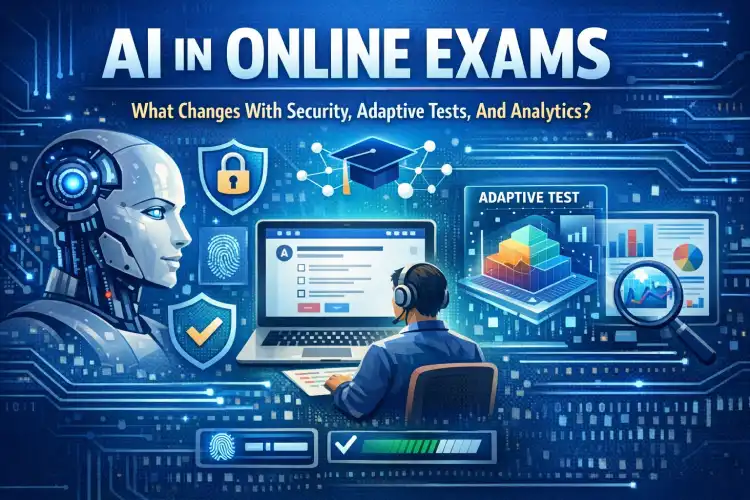
AI is changing online exams in a very practical way. Not with hype. With speed, scale, and better decision-making.
It doesn’t replace good exam design. But it makes modern online examination system workflows sharper and more efficient.
AI Improves Question Creation And Variation
One major issue in online exams is repetition. When candidates see the same questions again and again, it reduces exam value.
AI can help generate alternate versions of questions, create more balanced question banks, and expand coverage. Combined with randomization, it makes each exam feel unique without extra manual work.
AI Enables Adaptive Tests
In traditional exams, everyone has the same difficulty. That’s fair on paper, but it can be inefficient.
With adaptive tests, the system adjusts the next questions based on performance. If someone answers correctly, it gets harder. If they struggle, it gets easier.
That makes the result more accurate, because the exam finds the candidate’s real level faster. It also improves experience, because learners aren’t stuck in a mismatch.
AI Supports Smarter Evaluation For Subjective Exams
Subjective exams are important, but grading them takes time.
AI can assist with AI evaluation by checking structure, identifying key concepts, comparing against rubrics, and highlighting weak logic. It doesn’t replace human judgment, but it reduces the grading load.
It also helps detect plagiarism and protects academic integrity, especially in essay-based exams. Tools like Turnitin are often used for this purpose.
AI Strengthens Security Without Over-Policing
Online exams don’t always need strict monitoring. But when they do, AI helps reduce risk.
Instead of relying only on strict rules, AI can flag unusual patterns like rapid switching, suspicious answer similarities, or abnormal behavior. This is useful in high-impact settings.
Some platforms also support proctoring and basic lockdown tools like a lockdown browser or secure browser, especially when compliance matters.
AI can also support identity verification workflows and strengthen security measures like encryption for protected data and exam sessions.
AI Makes Analytics Far More Useful
Without analytics, an online exam is just a score.
With AI-powered insights, you can see which questions were too easy, which topics were confusing, and which learners need help. That’s where real-time analytics becomes valuable.
This is especially useful in courses and hiring. You don’t only see who passed. You see why someone passed and where someone struggled.
That insight improves teaching, improves training, and improves hiring outcomes over time.
Conclusion: What to Remember
Online exams are powerful, but they only work well when the format matches the goal. A quick objective test makes sense when you need speed and fairness. But if you want real understanding, you need deeper formats like essays, case studies, or practical tasks.
Here’s the simplest way to remember it all:
- Online exams exist in many exam formats because different skills need different measurements.
- Objective tests are fast and fair, but subjective exams reveal deeper understanding.
- Case studies and simulations are great for real-world problem-solving and applied performance.
- Aptitude and psychometric exams are helpful, but they should be part of a bigger decision process.
- Academic exams work best when they mix clarity, fairness, and useful feedback.
- Language placement exams are strongest when they include speaking and writing, not only selection questions.
- Coding exams are one of the best ways to measure true technical skill quickly.
- Course exams inside an LMS shine when they support learning and progress tracking.
- AI improves speed, evaluation support, and reporting, but oversight still matters.
- The right system is the one that matches your goal, not the one with the longest feature list.
At the end of the day, there’s no “perfect” online exam type. The best results come when you choose the format intentionally, keep the experience fair for learners, and focus on what the exam is truly meant to measure.